Ideas branch. We build them.

Independent product labs get romanticized as places where ideas float until something sticks. That is not how we work.
We start with a concrete problem, a technical idea that might actually change the answer, and a bias toward putting something in someone’s hands. The lab is a loop: Explore → Engineer → Ship, then back again with evidence from real use.
This post is how that loop works at Antler Labs, using OpenDrift as the example that made the method obvious to us.
Why “ideas branch”
Most software commits early to a single path. A prompt returns one completion. A roadmap picks one bet. A launch freezes one.
We care about the branches: the near-misses, the ranked alternatives, the version of the product that almost happened. Branching is not indecision. It is how you see where the model (or the market) is confident, and where it is guessing.
That framing shows up in how we build products, and it shows up literally in OpenDrift.
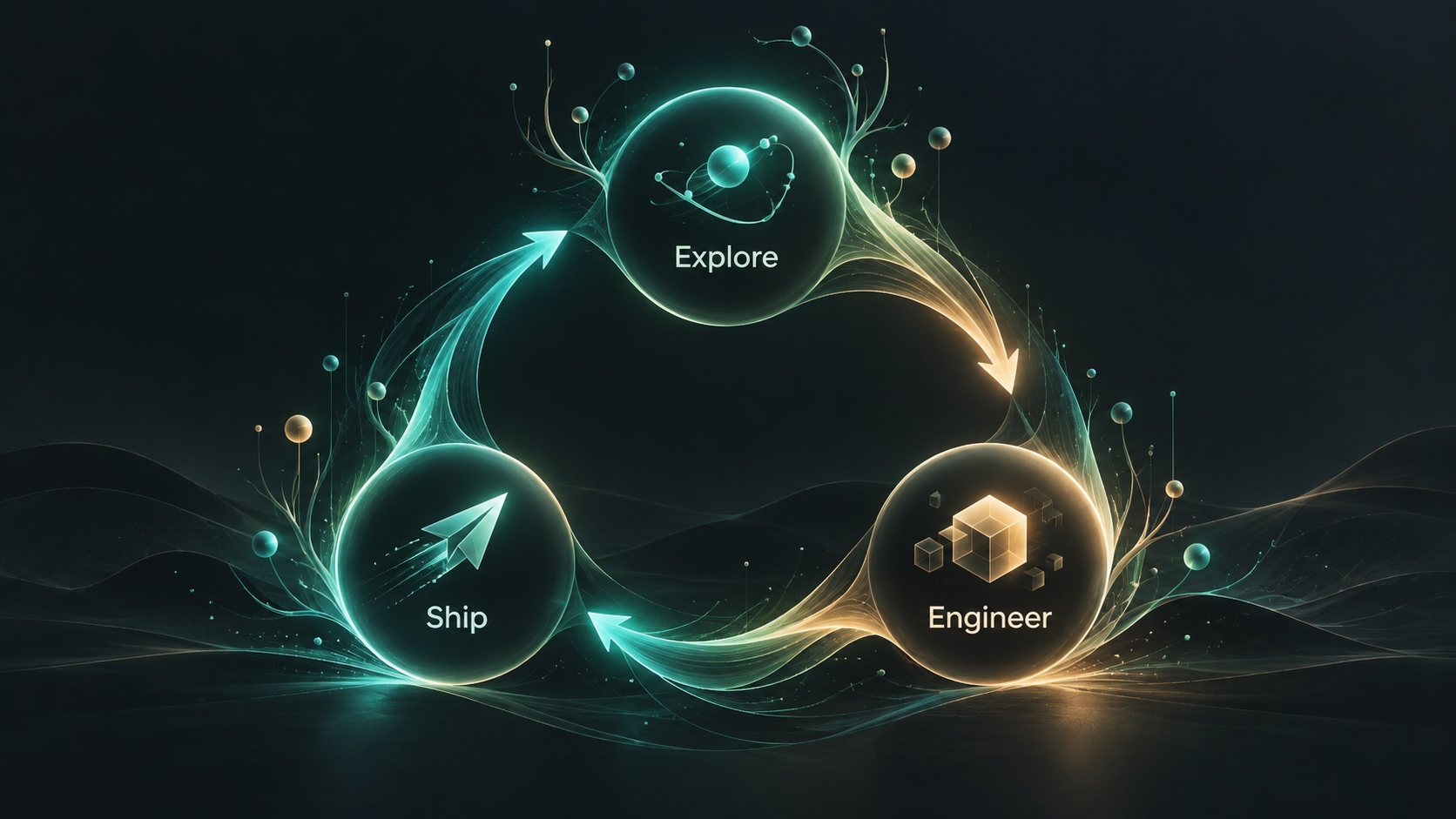
Explore
Explore is not brainstorming theatre. It is a short, sharp pass at:
- Who feels the problem — not a persona slide, a real workflow that already hurts.
- What technical idea is worth the cost — a mechanism, protocol, or sampling strategy that changes the shape of the answer.
- What you can prototype in days — enough to falsify the hunch before you invent a platform.
For OpenDrift, the problem was simple: a single LLM sample hides the landscape. You get one fluent answer and no sense of what else the model almost said. The technical idea was Verbalized Sampling through OpenRouter: ask the model for several candidates with probability scores in structured XML, then parse, rank, and persist them.
The prototype did not need a brand. It needed a ranked list you could trust enough to argue with.
Engineer
Engineer is where promising exploration becomes something other people can operate.
We draw hard boundaries early: interface, API, persistence, and the parts that must stay replaceable. Clarity beats cleverness. If a component cannot be explained in a sentence, it is probably doing two jobs.
OpenDrift’s core path stayed narrow on purpose:
- Send a prompt with Verbalized Sampling.
- Parse structured candidates and scores.
- Rank and save them so comparison is a first-class action, not a screenshot ritual.
Everything else (creative workflows, evaluation harnesses, uncertainty inspection) sits on that spine. The product is useful because the spine is boring in the best way.
Ship
Ship is not the end of the story. It is the first time the loop gets external evidence.
We look for:
- Where people get stuck in the first five minutes.
- Which ranked alternatives they actually open.
- What they save, ignore, or send back into another prompt.
That feedback decides the next Explore pass. Sometimes it kills a feature. Sometimes it promotes a side path into the main product. Either outcome is cheaper than polishing in the dark.

OpenDrift as the worked example
OpenDrift explores the probability landscape of an LLM response instead of locking you into a single sample. Candidates come back with model-reported scores, get ranked, and persist so you can see confidence, near-misses, and useful alternatives in one place.
That is the lab thesis in product form: keep the branches visible until you know which one deserves to become the trunk.
If you evaluate models, write for ambiguity, or just want less fake certainty from a completion, try the live release and tell us what you wish the ranking showed next.
What we will publish next
This blog will stay close to the work: technical notes from products in the lab, decision records when we kill or promote an idea, and the infrastructure bets behind AI tools, payments, agent governance, and portable evidence.
Next up: a deeper look at Verbalized Sampling in OpenDrift — what the XML contract buys you, and where probability scores lie to you.
Antler Labs is an independent product and engineering studio. Ideas branch. We build them.
Questions or something to explore: hello@antlerlabs.dev